
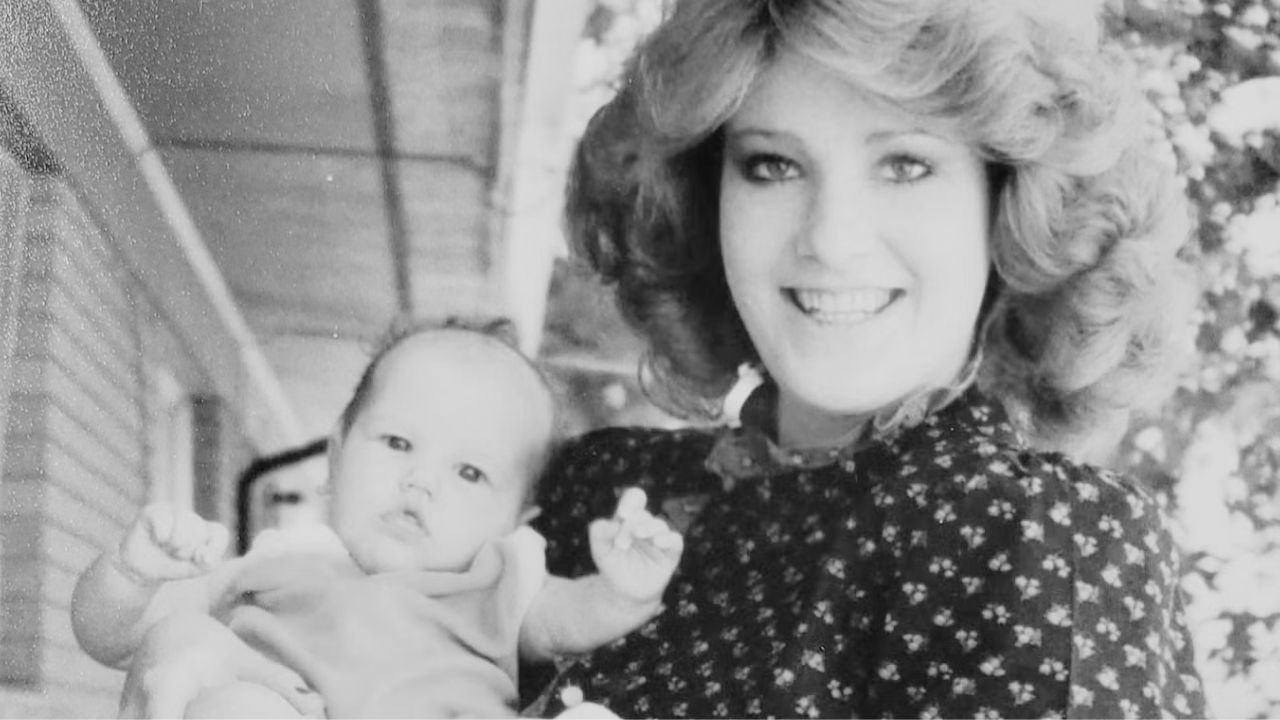
The name Brenda Wright appears across genealogy databases, obituary records, and true-crime discussions. But not every result refers to the same person. One specific Brenda Wright, however, has become a recognized figure in American true-crime history — and her story has reached a much wider audience in recent years through television.
This article focuses on Brenda Wright Lafferty — her birth, her family, and her life before 1984. It also explains why her name is so often confused with unrelated individuals in online records, and how her story was later brought to public attention through a major streaming series.
The Brenda Wright Most People Are Searching For
When people search the name “Brenda Wright” in a true-crime or entertainment context, the person they are almost always looking for is Brenda Wright Lafferty. She is the figure most commonly associated with this name in those discussions.
It is worth being clear from the start: Brenda Wright Lafferty was a real person, not a fictional character. She lived a real life, had a real family, and her story has been covered extensively by journalists and authors over the decades.
This article stays grounded in documented biographical facts. It does not rely on dramatized portrayals or speculation. The goal is to present who Brenda Wright actually was, not just how she has been depicted on screen.
Her Early Life and Family in Utah and Idaho
Brenda Wright was born on July 19, 1960, in Logan, Utah. Her parents were LaRae Hatch Wright and Dr. James Lewis Wright, according to reporting by the Deseret News.
She grew up in Idaho in a Latter-day Saint family. According to TIME, her family was devout but comparatively liberal within that faith tradition. This background is important context, because it was quite different from the fundamentalist religious environment she later encountered through her marriage into the Lafferty family.
Published reporting also describes Brenda as a former beauty queen. That detail, confirmed by TIME, gives a small but meaningful glimpse into her life and personality before the events that made her name known nationally. She was a young woman with her own story, her own ambitions, and her own identity.
It would be easy — and unfair — to define Brenda Wright entirely by what happened to her. Her upbringing, her family, and her character all deserve to be recognized on their own terms.
What Happened in July 1984?
In July 1984, Brenda Wright Lafferty and her infant daughter Erica were murdered in Utah. The case became the subject of extensive legal proceedings and was widely covered in the press over the years that followed.
The murders involved members of the Lafferty family and eventually led to one of the most well-documented true-crime cases in Utah history. Both the criminal trials and the broader family circumstances were reported on in detail by major news organizations over many years.
This article does not go further into the specifics of the case than what has been clearly established in reliable published reporting. Speculation about private motives or family dynamics goes beyond what can be responsibly confirmed here.
What matters equally — and what sometimes gets lost in true-crime coverage — is that Brenda was a real person before any of this happened. She was a daughter, a wife, a young mother. Her infant daughter Erica was just fifteen months old. Both of their lives had value far beyond the circumstances of their deaths.
Brenda Wright Lafferty and Under the Banner of Heaven
Brenda Wright Lafferty’s story reached a much larger audience through two major works. The first was Jon Krakauer’s nonfiction book, which examined the case in depth and brought it to national attention. The second was Hulu’s limited series Under the Banner of Heaven, which dramatizes the events surrounding the murders.
The Hulu series, confirmed by TIME as connected to Brenda’s story, drew significant viewership and renewed public interest in her biography. Many viewers came away wanting to learn more about who the real Brenda Wright was.
However, it is important to understand what a dramatization is — and what it is not. Television adaptations use reconstructed dialogue, composite scenes, and compressed timelines to tell a story efficiently for a screen audience. That does not mean every scene is a verbatim record of what actually happened.
Viewers should approach the series as an interpretation of events, not as a documentary. For the most accurate picture of Brenda’s life and the case, reported journalism and court records are more reliable sources than scripted television.
There is also no confirmed indication that Brenda’s surviving family approved of or participated in the Hulu adaptation. That distinction matters when thinking about how her memory is being handled publicly.
Why “Brenda Wright” Returns So Many Different Results Online?
“Brenda Wright” is a common name. It is shared by many completely unrelated women across different states and countries. When you search the name in genealogy databases or obituary indexes, you are likely to find records for people who have nothing to do with the Utah case.
For example, published obituary records include:
- A Brenda Joyce Wright, born in 1944, from a different region entirely
- A Brenda Wright born in Dayton, Ohio, in 1953
- A Brenda Wright from Dewsbury, England, born in 1925
- A Brenda Corine Wright born in Missouri in 1955
None of these individuals are Brenda Wright Lafferty. A name match alone is simply not enough to connect a record to a specific person.
If you are trying to verify a genealogy record and determine whether it belongs to Brenda Wright Lafferty, you need more than just the name. Look for matching details such as:
- Birth date: July 19, 1960
- Birthplace: Logan, Utah
- Parents: LaRae Hatch Wright and Dr. James Lewis Wright
- Location: Idaho or Utah connections
Think of genealogy records like puzzle pieces. A single piece with a name on it does not complete the picture. You need the date, the place, the family names, and the sources all fitting together before you can confidently say a record belongs to a specific person.
This kind of careful verification matters, especially when the subject involves a real homicide victim and people who are still alive and connected to her story. Merging the wrong records can spread inaccurate information — and that is worth taking seriously.
For readers researching family history or public records more broadly, GrowBusinessPoint covers topics related to research, verification, and public information in practical terms.
Separating the Real Person from the Online Noise
Brenda Wright Lafferty lived for twenty-three years before the events of July 1984. She was born into a family in Logan, Utah. She grew up in Idaho with parents who gave her a grounded upbringing within their faith. She was, by published accounts, a young woman of personality and presence.
Her story was later adapted for television, which introduced her name to millions of viewers. That attention has its value — it keeps the historical record visible. But it also creates confusion, especially when viewers search her name and run into a flood of unrelated genealogy results.
The clearest way to navigate that confusion is to stick to verified details: her confirmed birth date and birthplace, her parents’ names, and her connection to specific reported events. Everything else requires careful sourcing before it can be trusted.
Brenda Wright Lafferty deserves to be remembered accurately — as a real person with a real history, not as a collection of uncertain search results or a two-dimensional figure from a streaming series. That is the most honest way to honor who she actually was.
Read Also: