
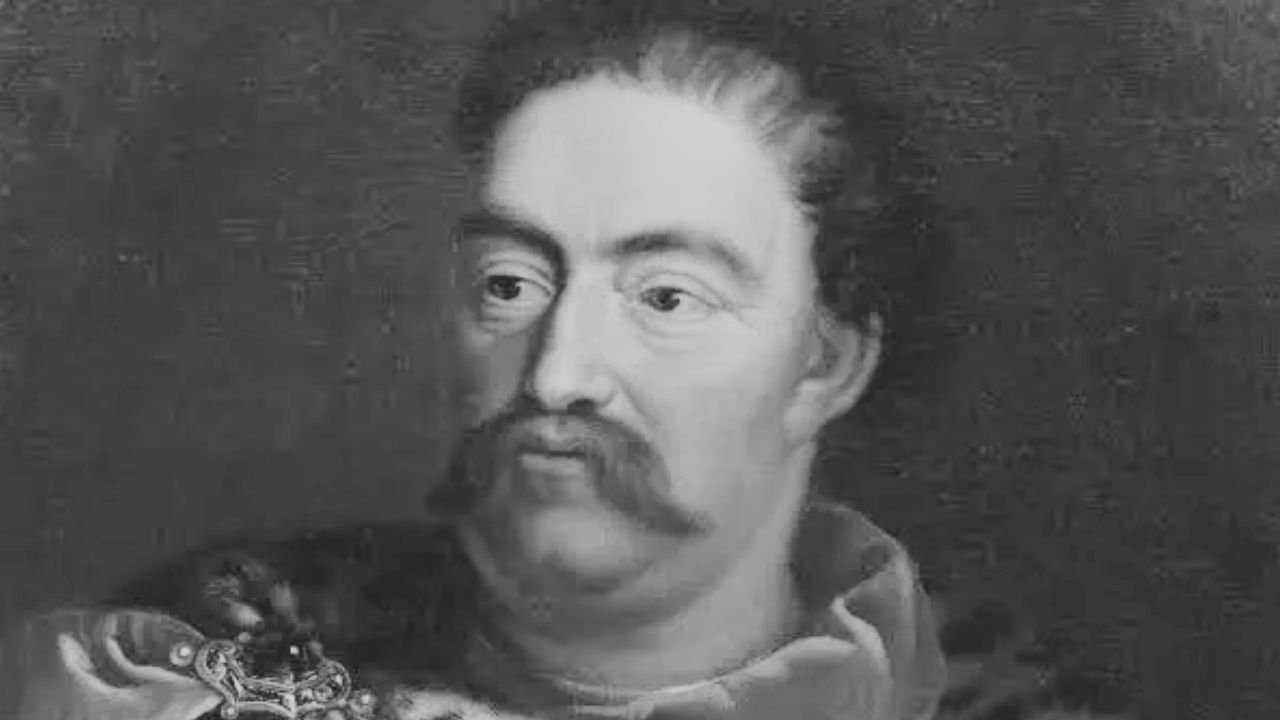
In 1683, a Polish king led one of the largest cavalry charges in European history outside the walls of Vienna. That single moment changed the course of a continent. Yet most people who know the name John III Sobieski know very little beyond that battle.
This article covers who he actually was — his origins, his rise to power, his family, and why historians and genealogists still talk about him today.
Who Was John III Sobieski?
His full name was Jan III Sobieski, though he appears in historical records under several variations: John III Sobieski in English, Jean Sobieski in French contexts, and Latinized forms like Ioannes Sobiscius in older documents.
He was born on August 17, 1629, in Olesko, a town within the Polish-Lithuanian Commonwealth. He went on to serve as King of Poland and Grand Duke of Lithuania from 1674 until his death in 1696.
This is important to say clearly: Sobieski was not a modern public figure. He was a 17th-century monarch. His name still appears regularly in encyclopedias, genealogy databases, and Polish cultural memory because of his historical weight — not because of anything recent.
His Family Background and Early Life
Sobieski came from the Polish nobility. His father, Jakub Sobieski, held the prominent title of castellan of Kraków and was a respected political figure within the Commonwealth.
His mother, Zofia Teofilia Danilowicz, connected the family to powerful noble lineages — including the Danilowicz and Żółkiewski families. These weren’t minor names. They placed young Jan at the center of Polish aristocratic and military life from birth.
He received a solid education and spent time traveling across Europe in his youth. That exposure gave him firsthand knowledge of foreign languages, political systems, and military culture — experience that would serve him well in the decades ahead.
From Military Commander to Elected King
Sobieski didn’t simply inherit a crown. Poland’s monarchy worked differently from most of its European neighbors. The nobility elected their king, which meant the throne had to be earned through reputation, alliances, and political support.
Before he became king, Sobieski built his name through military campaigns against the Ottoman Empire, Sweden, and Muscovy. He was known as a capable, hands-on commander — not just a political figure who directed battles from a distance.
When King Michael Korybut Wiśniowiecki died, the Polish nobility held an election. In 1674, they chose Sobieski as their next king. He was formally crowned in 1676.
The fact that he was elected matters. It means he rose to the throne because of what he had built — not simply because of the family he was born into.
The Battle of Vienna and Why It Still Matters
On September 12, 1683, Sobieski led a combined force of Polish, Austrian, and German troops to break the Ottoman siege of Vienna. The city had been under siege for months, and its fall would have opened a path deeper into central Europe for the Ottoman forces.
The battle included one of the largest cavalry charges of the era. Sobieski commanded the allied forces personally, and the relief effort succeeded. The Ottoman army was driven back.
Historians widely regard this as a turning point in the long struggle between the Ottoman Empire and the Habsburg powers. It contributed to a gradual Ottoman withdrawal from central Europe over the following decades.
A few things are worth keeping in clear view, though. This was a coalition effort. Sobieski led allied forces that included Austrian and German units alongside the Polish cavalry. And while the battle was highly significant, the Ottoman Empire’s eventual withdrawal from central Europe was a long process — not the result of a single day’s fighting.
What the Battle of Vienna did was shift momentum. It made Sobieski’s name known across the continent, and it remains the centerpiece of his historical legacy.
Marysieńka — His Wife and Political Partner
Behind the military image was a more personal story. In 1665, Sobieski married Marie Casimire Louise de la Grange d’Arquien, a French-born noblewoman who became known in Poland simply as Marysieńka.
She had previously been married to Polish magnate Jan Zamoyski. After Zamoyski’s death, she and Sobieski married — a union that turned out to be both deeply personal and politically significant.
The couple exchanged an extensive body of letters over the years. Those letters give historians a rare window into the private side of a 17th-century monarch. Sobieski wrote to Marysieńka with warmth and regularity, even during military campaigns.
She was not simply a background figure. Marysieńka was active in court politics and played a role in shaping decisions during his reign. Their partnership is one of the more well-documented royal relationships of the period.
Children and Dynastic Hopes
John and Marysieńka had several children together, though not all survived into adulthood. Their children who reached adulthood included Jakub Ludwik, Aleksander Benedykt, Konstanty Władysław, and Teresa Kunegunda.
Sobieski had ambitions for his family’s future. He hoped to build a lasting political position for the Sobieski name within Poland and across Europe. His daughter Teresa Kunegunda’s marriage to Maximilian II Emanuel, Elector of Bavaria, was one step in that direction — a significant European dynastic connection.
However, the Commonwealth’s elective system worked against hereditary ambitions. Other nobles had no interest in allowing a single family to consolidate permanent power. Sobieski’s efforts to secure the throne for his sons ultimately did not succeed. He remained a celebrated king, but not the founder of a lasting ruling dynasty.
His Later Reign
After Vienna, Sobieski continued to campaign, but his later military efforts did not match the success of 1683. Some campaigns fell short of their territorial goals, and the political environment within the Commonwealth remained difficult to manage.
The Polish-Lithuanian Commonwealth of the 17th century was not a centralized state. Its powerful nobility could — and often did — resist royal authority. Even a king with Sobieski’s military prestige faced constant political friction at home.
For readers who encounter his name through GrowBusinessPoint or other sources covering historical figures, this context is worth knowing: his later years were shaped as much by political constraints as by military ones.
Death, Burial, and Lasting Legacy
John III Sobieski died on June 17, 1696, at Wilanów — the palace outside Warsaw that he had built during his reign. He was buried at Wawel Castle in Kraków, the traditional resting place of Polish monarchs.
Wilanów Palace still stands today and serves as a museum. His portraits, armor, and personal artifacts remain part of its collection. The palace itself is one of the most visited historical sites in Poland.
His memory has remained strong in Polish culture in ways that go beyond textbook history. Schools, military units, monuments, and public spaces carry his name. The 1683 victory at Vienna continues to be discussed in European military history, and the anniversary has drawn attention from historians, politicians, and the public in recent decades.
Sobieski in Genealogy Records
Many people encounter John III Sobieski not through history books but through genealogy research. His name appears in family trees on platforms like Geni, FamilySearch, and similar databases.
If you find his name in a family tree, a few things are worth keeping in mind. Online genealogy profiles are useful starting points, but they can contain errors — especially the further back you go. A claimed connection to Sobieski should be checked against scholarly sources and archival records, not accepted automatically.
It’s also worth noting that sharing the surname Sobieski does not establish descent from the royal family. The name existed across the broader Polish nobility, not exclusively within his immediate line.
Documented descent from Sobieski through verified records is a different matter from a shared surname or an unverified tree connection. If royal ancestry is something you’re seriously researching, the distinction matters.
A Full Picture of the Man
John III Sobieski was a soldier, a king, a husband, and a political operator working within a complicated system. The cavalry charge outside Vienna is what most people remember, and it deserves its place in the history books.
But the fuller picture is more interesting. He was a man elected to power by his peers, shaped by a noble upbringing and European education, devoted to a politically active wife, and genuinely invested in his family’s future — even when that future didn’t unfold the way he hoped.
His death in 1696 closed a reign that was uneven in places but anchored by one of the most consequential military victories of the 17th century. That combination of human complexity and historical impact is why his name has stayed in circulation for more than three centuries.
Read Also: