
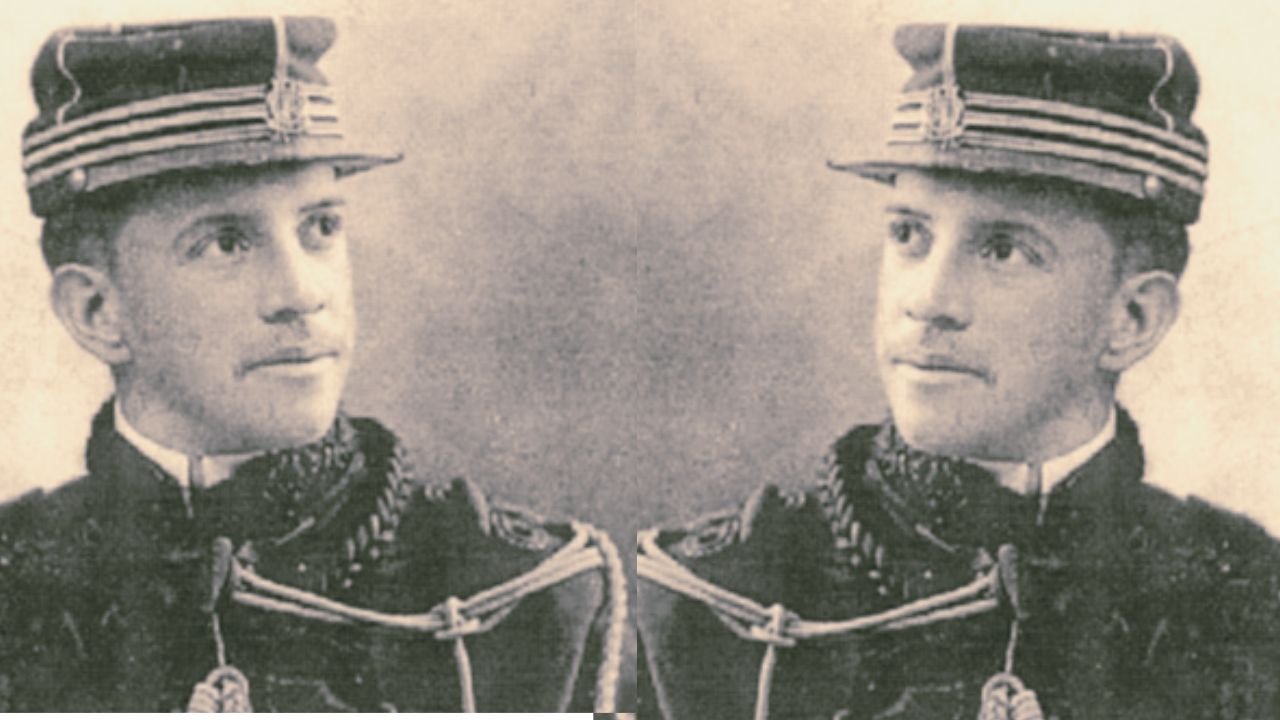
The name Porfirio Díaz almost always brings to mind one person: Mexico’s long-ruling president. But searches for “Porfirio Díaz Ortega” point to someone different — his son. The two men share a nearly identical name, and that overlap has caused genealogical confusion for decades.
This article is about the son. It covers who Porfirio Díaz Ortega actually was, what he did for a living, who he married, and why his descendants still matter to researchers tracing the Díaz family line.
Who Was Porfirio Díaz Ortega?
His full name was Deodato Lucas Porfirio Díaz Ortega. He was the fourth child of General Porfirio Díaz Mori — the president — and Delfina Ortega, the president’s first wife. To avoid constant confusion with his famous father, he was known throughout his life by the nickname “Porfirito.”
He was born on October 18, 1873, in Tlacotalpan, Veracruz. He died on December 28, 1946, in Mexico City, at the age of 73.
It’s worth being clear about one thing: Porfirio Díaz Ortega was not a president, a political leader, or an independent public figure in the way his father was. His significance today is mainly historical and genealogical. He matters because of who his father was, what he did professionally, and the family line he left behind.
His Father’s Mexico — Context Behind the Family Name
To understand why Díaz Ortega appears in so many historical searches, it helps to know a little about his father’s place in Mexican history.
Porfirio Díaz Mori served as Mexico’s president from 1877 to 1880, and again from 1884 to 1911. That second stretch of rule — nearly three decades — is known historically as the Porfiriato. It was a period of significant economic development but also of deep political repression.
Díaz Ortega’s mother, Delfina Ortega, was the president’s first wife. This is an important distinction. Porfirio Díaz later remarried, and his second wife was Carmen Romero Rubio — a different woman entirely. Many genealogy accounts mix up these two figures, so it’s worth keeping them separate.
Because the family sat at the center of Mexican political life for so long, the president’s children — including Porfirito — were inevitably shaped by both his rise and his eventual fall from power.
Military Engineer and Officer
Porfirio Díaz Ortega followed a professional path in the military. He studied at the Heroic Military College, with a focus on military engineering. He went on to serve as a military engineer and officer, and according to available sources, he had reached the rank of lieutenant colonel by approximately 1910.
His work as an engineer is associated with several public projects during the late Porfiriato period. Sources report connections to the construction of La Castañeda, the psychiatric hospital that opened in 1910, and the Normal School for Teachers in Tacuba. Some accounts also link him to work involving the Mexican Petroleum Company El Águila.
These associations come primarily from genealogy sources and a small number of published articles. It’s reasonable to present them as reported biographical details, but it would be an overstatement to say he personally designed or directed every project connected to his name. The historical record on his specific engineering role is limited.
Marriage and Family
Porfirio Díaz Ortega married María Luisa Raigosa García on November 15, 1897. The couple went on to have a large family, though the exact number of children varies depending on the source.
Some genealogy platforms report seven children; others say eight. Rather than presenting one figure as fact, the honest approach is to acknowledge both and note that the records don’t fully agree. This kind of discrepancy is common in genealogical research, especially for families whose documentation spans different countries and periods of political upheaval.
What is consistent across sources is that his descendants carry several distinct surnames, including Díaz Raigosa, Díaz Gastine, Díaz Glises, and Díaz Bossero. His branch of the family is considered one of the principal surviving lines descended from the former president.
Exile After 1911 and the Years in Europe
When Porfirio Díaz resigned the presidency in May 1911 — under pressure from the forces of the Mexican Revolution — the family left the country. The former president went into exile in France, where he died in Paris in 1915.
Porfirio Díaz Ortega also left Mexico after his father’s resignation. Sources indicate he spent time in England and France during the exile years. One account notes that he received some assistance from the British businessman known as Viscount Cowdray, though the nature and extent of that relationship is not fully documented in available records.
Living in Europe as the son of a deposed leader was a significant change. The family had gone from the center of Mexican political life to a kind of quiet European existence, far removed from the country they had dominated for a generation.
Return to Mexico
Díaz Ortega and his family did not remain in exile permanently. Sources report that the family returned to Mexico, with the return connected to an amnesty or policy associated with the presidency of Lázaro Cárdenas in the late 1930s.
After returning, the family settled in Mexico City. Some accounts place their residence in the Lomas de Chapultepec neighborhood, a well-known area of the capital. Porfirio Díaz Ortega lived out his final years in Mexico City and died there in December 1946.
It’s worth noting that the specifics of how and when different family members returned may have varied. The available record does not give a single, complete picture of every family member’s legal or personal situation during this period, so the return should be understood as a general account rather than a precisely documented sequence.
Why His Descendants Matter to Researchers?
Porfirio Díaz had several children, but not all of them survived into adulthood, and not all branches of the family produced documented descendants. That makes Díaz Ortega’s line especially significant for anyone researching the Díaz family tree.
His son Manuel Díaz Raigosa appears in genealogy records as a key figure in the next generation, and subsequent branches carry the surnames mentioned above. Some descendants have been identified in more recent coverage — including historian and writer Carlos Tello Díaz, who has written about Mexican political history.
For anyone interested in this kind of family history research, resources like GrowBusinessPoint can provide useful context on how to approach historical and biographical topics with the right level of care and accuracy.
One important caution: genealogy websites can be helpful starting points, but they often reproduce user-submitted information that hasn’t been verified against archival sources. Dates, child counts, and descendant links from platforms like Geneastar or MyHeritage should be treated as leads rather than confirmed facts unless they can be cross-checked.
Keeping the Names Straight
It’s easy to get turned around when researching this family. Here’s a simple breakdown to keep things clear:
- Porfirio Díaz Mori — the former president, also known simply as “Porfirio Díaz”
- Delfina Ortega — his first wife, mother of Porfirito
- Carmen Romero Rubio — his second wife, a separate figure
- Porfirio Díaz Ortega (“Porfirito”) — the president’s son, the subject of this article
- Luz Aurora Díaz — his sister
- Amada Díaz Quiñones — his half-sister, from a different relationship
When sources refer to “Porfirio Díaz” without the Ortega surname, they almost always mean the president — not his son. That single detail clears up most of the confusion that comes up in genealogical research.
A Quiet Place in a Famous Family
Porfirio Díaz Ortega lived a life shaped largely by his father’s fame. He served as a military engineer, married, raised a large family, spent years in European exile, and eventually returned to live out his final decades in Mexico City.
He was not a president, a celebrity, or a political figure in his own right. But he was the son of one of Mexico’s most consequential leaders, and through his descendants, the Díaz family name has continued into the present day. For historians and genealogists tracing that line, his story fills in an important part of the picture.
Read Also: