
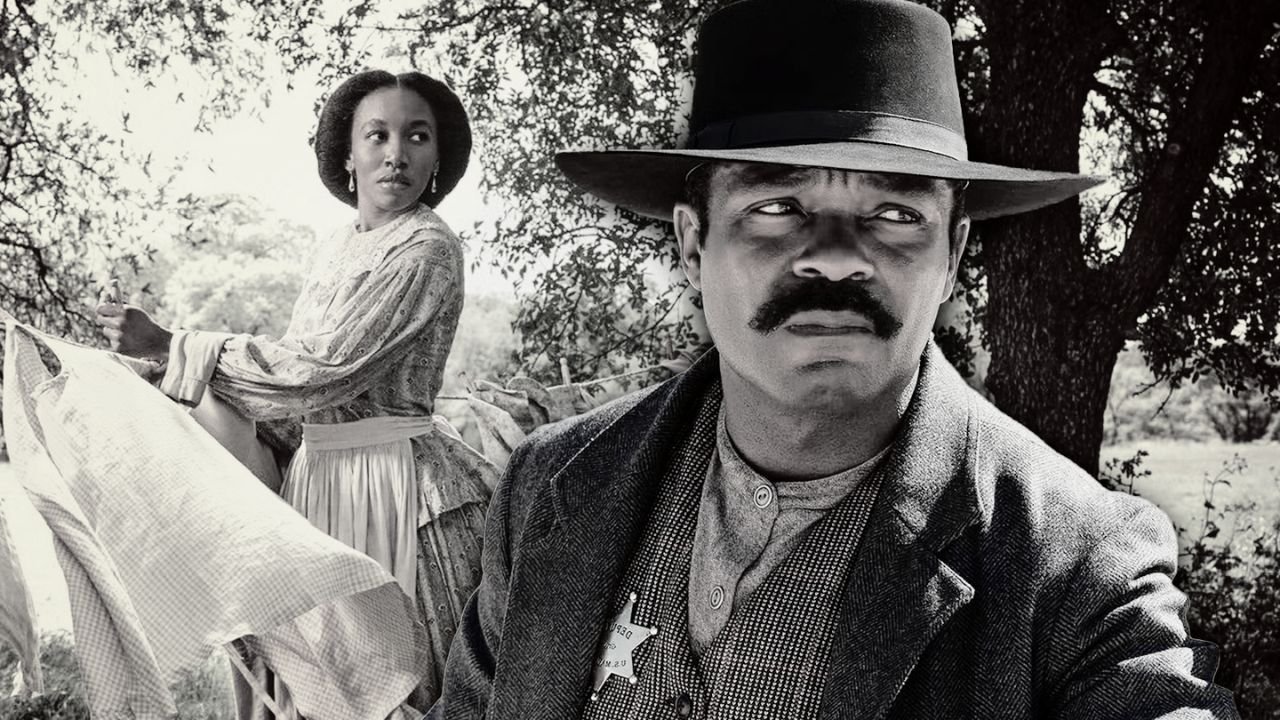
Most people who search for Nellie Jennie already know who Bass Reeves was. He is one of the most recognized African American lawmen in the history of the American West. But far less has been written about the woman who raised his family during one of the most turbulent periods in American history.
This article looks at what the available records actually say about Nellie Jennie — who she was, why her name appears in different forms, what her family life looked like, and why so many details about her remain uncertain. The goal here is to be honest about what is confirmed and what is not.
Who Nellie Jennie Was and Why Her Name Appears in Different Forms?
If you search for Nellie Jennie online, you will quickly notice that the results are inconsistent. Some records call her Nellie Reeves. Others use Jennie Reeves. A few secondary accounts refer to her as Nellie Jennie Haynes, suggesting a maiden name. These variations are confusing, and it helps to understand why they exist.
In historical and genealogy contexts, “Jennie” appears to reflect either a birth name or an alternate recorded name. It is not a separate person. The most likely explanation is that she was born Jennie and became Nellie Reeves after marrying Bass Reeves, though the precise naming history has not been confirmed by a strong primary source.
Genealogy databases like MyHeritage list several people under the name Nellie Jennie. Most of them are completely unrelated individuals from different states and time periods. The one connected to Bass Reeves is identified in that index as Nellie Reeves. Anyone researching this name should be careful not to merge her with other women named Nellie Jennie who appear in records from Alabama, Massachusetts, New York, or elsewhere.
The maiden name Haynes, which appears in some secondary articles, has not been confirmed by any institutional or primary source found in the available research. Treat it as a research lead, not a settled fact.
Her Connection to Bass Reeves
Nellie Jennie’s place in the historical record exists almost entirely because of her marriage to Bass Reeves. That is not a criticism — it reflects the reality of how records were kept in the nineteenth century, particularly for Black women. But it does mean her story is best understood within that broader context.
Bass Reeves was a formerly enslaved man who became a deputy U.S. marshal in Indian Territory after the Civil War. He is widely credited with making thousands of arrests across a vast frontier region and is remembered as one of the most consequential lawmen of the era. The Oklahoma History Center includes him in its institutional profile, which is one of the strongest sources available for information about his life and family.
Nellie was his first wife. Their marriage and family life took shape during the Reconstruction era and stretched into the late nineteenth century. Much of that domestic life was centered in Arkansas, where Bass worked as a farmer before taking on his marshaling duties. While Bass built a public reputation across Indian Territory, Nellie managed the household and raised their children.
She did not hold a public role or a professional position that generated independent documentation. Her historical presence is confirmed through her connection to Bass Reeves, not through records of her own public activities.
Their Family and the Children They Raised
Bass and Nellie built a large family together. The Oklahoma History Center states that they raised ten children. Other sources, including genealogy-oriented accounts and popular articles, report eleven. Because these published sources do not agree, it would be misleading to state a firm number as settled fact.
What can be said is that records and biographies commonly identify the following children: Sallie (also recorded as Sarah), Robert, Harriet, Georgia, Alice, Newland, Edgar, Lula, Benjamin, Homer, and Bass Jr. Depending on which source you consult, one or more of these names may be listed differently or omitted entirely.
Raising that many children on the frontier was no small undertaking. The demands of frontier life — limited infrastructure, frontier economies, and the particular pressures faced by Black families during Reconstruction — meant that the domestic world Nellie managed was genuinely difficult. That context matters even if the records do not fully document it.
Birth orders, individual birth years, and other specific details for the children are not reliably confirmed by the strongest available sources. Any article that presents those details with precision is likely drawing from user-submitted genealogy trees rather than verified historical records.
What the Records Say About Nellie’s Life and Death?
The MyHeritage indexed profile places Nellie Reeves’ life at approximately 1864 to 1896. If those dates are accurate, she died relatively young — around her early thirties. That profile was updated in 2024 and remains one of the few indexed references to her life span.
However, a MyHeritage entry is not the same as a verified death record or an obituary. The platform aggregates both institutional records and user-submitted family trees. Entries can contain transcription errors, duplicate individuals, or details that have been passed from one tree to another without being independently confirmed.
Several secondary online articles give a specific death date and medical cause for Nellie. Those claims have not been confirmed by an institutional source or a primary document in the available research. Until a death certificate, church record, or contemporaneous obituary supports those details, they should be treated as unverified secondary claims.
Information about her birthplace, her parents, and her ancestry also varies across online accounts. Some articles make specific claims about her background, but those details are not backed by the strongest available sources. The cautious position is to acknowledge that her early life is not well documented rather than repeat claims that cannot be verified.
Why These Gaps Exist?
The limited documentation around Nellie’s life is not accidental. It reflects a broader historical pattern. In the nineteenth century, record-keeping was inconsistent, and records for Black Americans — especially women — were often incomplete, poorly preserved, or never created in the first place.
Census records, church documents, and local registries from this period frequently omitted names, misspelled them, or recorded only the head of household. Women like Nellie, who lived outside the public eye, left fewer traces simply because the systems of the time were not designed to document their lives fully.
This is worth naming clearly, not as an excuse for thin research, but as honest historical context. The gaps in Nellie’s record are a feature of the era, not evidence that she was unimportant.
After Nellie: A Note on Family Chronology
Secondary sources state that Bass Reeves married a woman named Winnie Sumter in 1900, following Nellie’s death. That detail is included here only to complete the family timeline and to confirm that Nellie’s death is generally placed in the 1890s across multiple accounts — which aligns with the approximate date in the MyHeritage profile.
Bass Reeves went on to serve as a lawman in Muskogee, Oklahoma, and continued working well into his later years. He died in 1910. His legacy has grown considerably in recent decades through biographies, historical research, and screen adaptations, which is part of why interest in Nellie’s story has increased as well.
For readers who want to continue researching this topic, resources like the Growbusinesspoint website can help with finding credible sources and evaluating genealogy claims against historical evidence.
What You Can Reasonably Conclude?
Nellie Jennie was the first wife of Bass Reeves and the mother of a large family that grew up during one of the most significant periods in American history. The name “Nellie Jennie” appears in multiple forms across historical records — including Nellie Reeves and Jennie Reeves — and genealogy databases list several unrelated people under the same name, which makes careful research essential.
The Oklahoma History Center confirms that Bass and Nellie raised ten children together, though other sources report eleven. The MyHeritage index places her life at approximately 1864 to 1896, making her relatively young at the time of her death. Specific details about her birth, ancestry, and the precise circumstances of her death have not been confirmed by primary sources.
What history does confirm is that she was present through the years when Bass Reeves built his reputation, that she raised a large family under genuinely difficult conditions, and that the private world she maintained ran alongside a very public career. That is not a small thing, even if the records did not always find it worth writing down.
Read Also: